This is rather long. I can probably summarize it further, as some parts feel a little redundant. My main motivation behind this analysis was to understand why MU became so popular in Korea and Latin America (where I first played it), and what has it's legacy become. I think I have answered both questions satisfactorily here, but I highly encourage you to read the sources I cite below, as they also give you a glimpse into what the MMORPG scene was (specially in Asia and LATAM) when MU Online launched in the early 2000s.
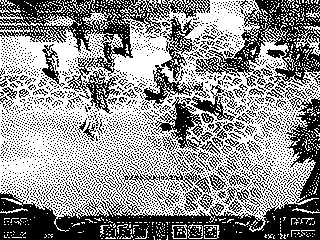
MU Online is a medieval fantasy MMORPG developed by Webzen, first launched in South Korea in late 2001 and later reaching global audiences by 2003. It quickly amassed millions of players, becoming one of the most popular online games of the early 2000s.
This analysis explores MU Online's gameplay design from its PC origins to its modern mobile adaptations, examining the features that made it enjoyable and distinctive, the design choices that limited its growth, and how its gameplay experience compared to contemporaries like Lineage, Ragnarok Online, and World of Warcraft.
Regional differences in player reception (notably in South Korea, Latin America, and Europe) are highlighted, alongside an overview of the transition from the classic PC version to recent mobile titles in the MU franchise.
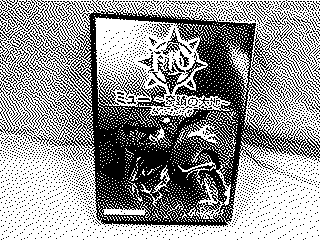
MU Online debuted as South Korea's first fully 3D online RPG and quickly rose in prominence. By 2003, MU boasted 3.3 million registered subscribers in Korea, with up to 500,000 concurrent players. This massive following made MU a close rival to NCsoft's Lineage, which had previously dominated the Korean MMORPG scene. The game's addictive monster-slaying gameplay loop was cited as a key to its appeal: one Korean player described MU as "probably the most addictive computer game I've ever played... it makes you forget all your worries".
Such fervent engagement drove Webzen's rapid growth and even led to a highly successful IPO in 2003. MU's popularity was not confined to Korea, though: licenses were quickly signed to launch the game in China and Taiwan, attracting hundreds of thousands of players in those regions within months.
By the mid-2000s, MU Online had established itself as a pioneering ARPGMMO hybrid, seamlessly melding hack-and-slash combat and loot hunting with persistent online world elements.
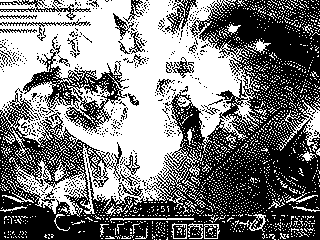
MU Online's core gameplay was strongly inspired by action RPGs like Diablo, which set it apart from many contemporaneous MMORPGs. It uses an isometric, top-down viewpoint and click-to-move combat, focusing on fast-paced monster grinding and item loot rather than narrative quests. Players advance by slaying hordes of enemies in dungeon-like zones, constantly hunting for better gear and experience points.
This kill-loot-level loop proved highly satisfying and "straightforward and addictive: fight monsters, upgrade gear, and keep pushing levels". The design emphasizes long-term progression: MU's level cap eventually exceeded 1,100, offering an almost endless grind for dedicated players. Distinctive features such as the acquisition of special wings at higher levels (granting both aesthetic flair and stat boosts) further incentivized players to keep leveling. The loot system is a major hook: equipment drops come with randomized bonus attributes, meaning even after finding a high-tier item, players will continue farming for an ideal stat roll.
This Diablo-like RNG loot chase gives incremental rewards and a sense of optimization that can "easily consume entire evenings" for those drawn to min-maxing gear.
Another defining aspect of MU's design is its open PvP and guild warfare. Outside of safe zones, any player could attack others, making the world feel dangerous and competitive. To prevent chaos, MU implemented an outlaw system: player killers would be flagged and penalized, even risking item drop on death. PvP thus had high stakes, which appealed to gamers nostalgic for a harsher old-school MMO atmosphere. In addition to random PK, organized PvP took shape in guild vs. guild battles and castle siege events, reflecting massive guild wars that gave MU a reputation for large-scale conflict in its prime.
This mix of cooperation and competition fueled community bonds: forming parties to grind XP was rewarded, and guild alliances were key to survival in PvP. Many veteran players fondly recall the thrill of contested leveling spots, party buffs, and rival guild feuds as a core part of MU's charm.
Socially, MU Online encouraged group play in its own way despite minimal quest content. Early versions even gave bonus experience to parties with mixed-level members, as an incentive for higher-level players to help newbies. While the game world lacked a deep story, the player-driven experiences, from co-op monster hunts to the excitement of seeing a rare jewel drop, created lasting memories in the player community.

Despite its strengths, certain design choices in MU Online may have impeded its long-term growth, especially as the MMORPG genre evolved.
One often-cited drawback is the extreme reliance on grinding. MU offers only a thin layer of quests or narrative; after a brief tutorial, most objectives boil down to repetitive monster killing with little variety. For players accustomed to (arguably) modern MMOs with rich storylines and diverse questing, MU's content can feel bare and monotonous. Enjoyment of the game heavily depends on one's tolerance for continuous farming, making it off-putting to those who dislike heavy repetition. This grind-centric design, while a feature to hardcore fans, limited MU's appeal in markets where games like World of Warcraft (with abundant quests and lore) set new standards for PvE experience.
Another limitation was MU's dated technology and presentation. Even by mid-2000s standards, the game's character customization was virtually nonexistent. At creation, players picked from only three classes (Dark Knight, Dark Wizard, Elf) with fixed appearances (and gender locks). Early on, every character of a given class looked identical, which felt restrictive especially when many games from the same era (and even way older) offered more freedom in avatar design. Although MU's visuals were serviceable and allowed broad compatibility, by the late 2000s its graphics and interface appeared antiquated. Reviews noted that "the visuals, animations, and general presentation are firmly rooted in the early 2000s", which could alienate new players coming from more modern titles.
Balance and accessibility issues also arose. The initial three classes had imbalanced difficulty curves. For example, Dark Wizards were notably fragile early on, while Dark Knights could level more smoothly due to their toughness. Newcomers faced a steep learning curve with little in-game guidance (even basic features like stat distribution and skill purchases had to be figured out largely on one's own).
Furthermore, the progression was highly pay-to-win in later iterations. As MU transitioned from subscription to free-to-play, Webzen introduced microtransactions for items and even for unlocking additional character classes. Over time, many players felt the official servers became "a pay to win mess", driving some of the community to private servers in search of fair play. Indeed, MU spawned a massive private server ecosystem, which, while a testament to the game's appeal, also fragmented the player base and sometimes provided experiences (higher XP rates, custom content) that the official game lacked.
Basically, MU struggled to innovate beyond its initial formula. NCsoft's Lineage series and Gravity's Ragnarok Online both eventually modernized or expanded their gameplay (e.g. Lineage II's fully 3D world and politics, RO's extensive class/job system and lore), whereas MU largely doubled down on grind and gear. The lack of a robust trading infrastructure (no built-in auction house, for example) was another con that hindered the in-game economy and quality-of-life for players.
Taken together, these design shortcomings (repetitive gameplay, outdated presentation, limited customization, and later monetization issues) likely constrained MU Online's growth outside of its core fan bubble.
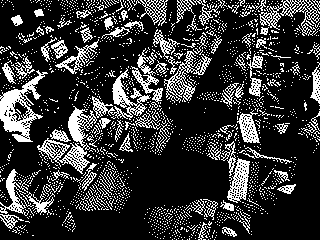
In its home country, MU Online was a household name among early 2000s gamers. It ranked among the top online games, famously trailing only StarCraft and Lineage in popularity at PC cafés. Korean gamers' affinity for MMORPGs meant MU enjoyed enormous popularity alongside its rivals during the golden age of PC bang gaming. MU was initially a subscription game in Korea (₩27,500 monthly fee, about $20 USD), which positioned it as a premium experience, yet its growth was explosive. The success was aided by South Korea's widespread broadband by 2003, which fostered a booming online game culture.
Culturally, MU fit well with the competitive gaming spirit in Korea. The open PK system and guild battles resonated with players who enjoyed proving their skills and teamwork. Some experts at the time even described MU as the "rising sun" as Lineage's star started to wane, highlighting how MU briefly challenged the reigning champion. Over time, Lineage II and other titles took back momentum, but MU's legacy in Korea endures. The IP has remained strong: a decade and a half later, the mobile spinoff MU Origin topped Korean app charts in 2015, largely powered by nostalgia from gamers in their 30s and 40s who grew up with the PC version.
Unexpectedly, MU Online became a cultural phenomenon in various Latin American countries. In the mid-2000s, Brazil, Argentina, Peru, and others developed thriving MU communities, often centered around local cyber cafés (LAN houses) and unofficial servers. One reason was the game's low system requirements and tolerance of high latency, which made it playable on the modest hardware and internet connections available to many Latin American gamers at the time.
Moreover, MU was free-to-play (after its global launch and later pirated codebases), whereas Western MMOs like WoW were either unavailable or required purchase and subscription. Brazilian gamers, for example, largely missed out on early MMORPGs like EverQuest or Ultima Online, and World of Warcraft arrived years late. Instead, they flocked to free Asian titles: MU Online, along with Ragnarok Online, Priston Tale and others, were among the first MMOs to define the scene in Brazil.
Anecdotal evidence underscores this popularity: "Here in Brazil free-to-play MMOs were the main thing: especially low-spec MMOs (due to the average Brazilian PC power back in the day)," one player recalls. In Peru and Argentina, MU was likewise huge; local private servers like "MU Magdalena" (I used to play here) or seasonal servers in Argentina sustained thousands of players well into the 2010s. These communities often operated in a semi-underground fashion, with many neighborhood LAN cafés running their own MU server for locals.
The result was a strong social fabric: Latin American players remember MU for intense guild competitions and mandatory party leveling (e.g. needing an "energy elf" support in your party for buffs) which made the gameplay deeply collaborative. The regional engagement was such that even as official servers faded, the nostalgia-driven private server scene kept MU alive. By the 2020s, the official global server's population reportedly included a large number of Brazilian players (alongside Asians), attesting to the lasting loyalty in the region.
MU Online's reception across Europe was mixed and varied by subregion. In Western Europe, MU never achieved the prominence it had elsewhere. Gamers in those countries gravitated toward titles like RuneScape, EverQuest, or later World of Warcraft.
However, in Eastern and Southern Europe, MU Online enjoyed significant popularity. Countries like Poland, the Baltic states, Romania, and Turkey saw large MU player bases, often analogous to the Latin American experience of private servers and LAN centers. Polish gamers in the early 2000s, for instance, were more likely to be found playing Tibia or MU Online than RuneScape.
Similarly, in Romania MU was (and still is) commonly played; reports in 2021 noted several Romanian-run private servers boasting 1,000+ concurrent players, and even Romanian guilds active on the official global server. Southern Europe (e.g. Italy, Spain, Greece) also had pockets of MU fandom, often introduced via local cyber cafés or word-of-mouth. One Reddit comment summarized it: "Free-to-play games or private servers were popular in certain regions like eastern & south Europe and South America", whereas the Anglosphere was in a different bubble of MMOs.
MU Online achieved only limited success in North America largely because its core design philosophy clashed with the dominant expectations of the region's MMORPG audience. While MU offered a fast, grind-driven, loot-centric experience inspired by action RPGs, North American players in the mid-2000s increasingly favored games with strong narrative structure, extensive questing, polished presentation, and balanced progression systems, epitomized by titles like World of Warcraft.
MU's minimal storytelling, repetitive gameplay loop, dated visuals, and heavy reliance on long-term grinding made it feel archaic rather than charming to many Western players, while its later shift toward pay-to-win mechanics further eroded its appeal in a market more sensitive to fairness and content depth.
Additionally, MU lacked strong marketing, localization, and cultural positioning in North America, arriving as an imported Korean MMO without a compelling identity in a crowded genre.
I believe there might be a correlation here between English literacy and MU popularity. Since MU was highly geared towards repetitive grind and not deep questlines and written lore, players with no English backgrounds could equally enjoy the game. This, coupled with the low specs expected by the title, made it an obvious choice for players looking for modern, but modest and understandable, MMORPGs.
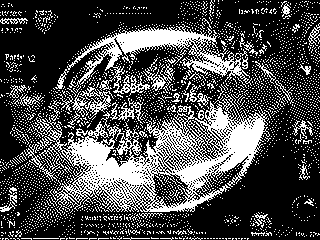
As the years went on, Webzen sought to bring the MU franchise to new platforms. The original PC MU Online has continued to receive updates (new "seasons" adding classes, maps, etc.) and still maintains an active (if niche) playerbase. However, recognizing the shifting gaming landscape, Webzen licensed the IP for mobile titles, most notably MU Origin (2015) and its sequels (MU Origin 2 in 2018, and MU Origin 3 in 2022). These mobile adaptations have tried to (re)capture the spirit of MU Online's gameplay while adjusting to mobile user habits.
Pictured above and developed by a Chinese studio under Webzen's supervision, MU Origin was a fast-paced, combat-heavy mobile MMORPG that transplanted MU's setting and classes onto smartphones. It streamlined the experience for quick sessions: players chose from only three classic classes (Dark Knight, Dark Wizard, Elf) and dived into instanced dungeons and automated quests.
The core gameplay remained a monster-slaying loop with flashy skills and constant gear upgrades, successfully recreating the familiar MU atmosphere on mobile. MU Origin was notable for heavy use of automation, though: it introduced an auto-combat and auto-pathing feature that could essentially play the game for you, handling movement, fighting, looting, and even equipping new gear automatically. This design was shocking to some veteran players, but it proved fitting for the mobile platform, where play often occurs in short bursts or multitasking environments.
This progression-first philosophy meant the game showered players with rewards and experience; leveling was dramatically accelerated compared to the original MU. The mobile version also packed in numerous daily events, time-limited bosses, and an Arena PvP ladder, ensuring there was always some goal to chase or reward to claim.
In terms of reception, MU Origin was extremely successful in East Asia, topping Google Play and App Store charts in Korea and China on launch. Its success largely rode on nostalgia: many players in their 30s who remembered MU flocked to the mobile version, as well as on the free-to-play, event-heavy design that drives mobile MMORPG monetization.
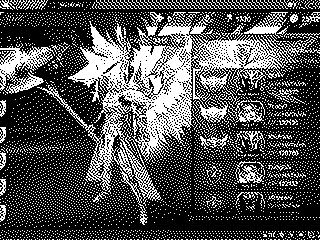
The sequels have iterated on the formula with improved graphics and more content. MU Origin 2 (2018) presented a visual upgrade and reintroduced some classic MU elements (like the wings system, pets, and deeper story quests) to enrich the mobile experience. Nonetheless, it retained the autoplay and fast leveling that define the mobile spin-offs. A critique that emerged is that these mobile titles can feel like idle games.
That said, these adaptations successfully revitalized the franchise's popularity, especially in Asia. By 2018, MU Origin 2 was reportedly competing neck-and-neck with Lineage's mobile game in Korea's top-grossing charts, pulling in hundreds of millions of won per day. The mobile games also introduced MU to new audiences in regions like Southeast Asia, where MU Origin 2 saw a strong release. Meanwhile, MU Legend (a PC successor in 2018) attempted to modernize MU for PC ARPG fans, though it had a more modest impact globally.
The continued investment in the IP, whether via mobile sequels or events like a planned Web3 version presented at Brazil Game Show 2025, indicates that MU's core design still holds appeal. It's a design rooted in nostalgia and simple, satisfying feedback loops: the joy of hearing great item drop, the glow of a new shiny armor piece, or the camaraderie of a guild party grinding overnight.
The mobile iterations of MU monetize primarily by transforming progression itself into a purchasable commodity. Rather than selling new gameplay or narrative content, they sell acceleration within a deliberately layered power system built from gear, wings, pets, artifacts, upgrades, and VIP tiers.
Players are placed in an environment where advancement is technically always possible through grinding but becomes increasingly slow or uncertain without spending, while paid options offer faster growth, higher success rates, and reduced friction. PvP and rankings further reinforce this model, since power is largely statistical rather than skill-based, turning competition into a visible incentive to spend.
Randomized enhancement mechanics and loot systems introduce controlled uncertainty (i.e. better rates), borrowing from gacha design to make investment feel both necessary and emotionally rewarding. Tl;dr: MU's mobile games monetize not by changing what players do, but by monetizing how fast, how efficiently, and how competitively they can do it.
 Page compiled using Makompile on Mon Aug 31 20:07:26 2026.